「ルールに基づく国際秩序は終わった」カナダ首相がダボス会議で放った“衝撃の現実主義”演説全文
以下は、記事の抜粋です。
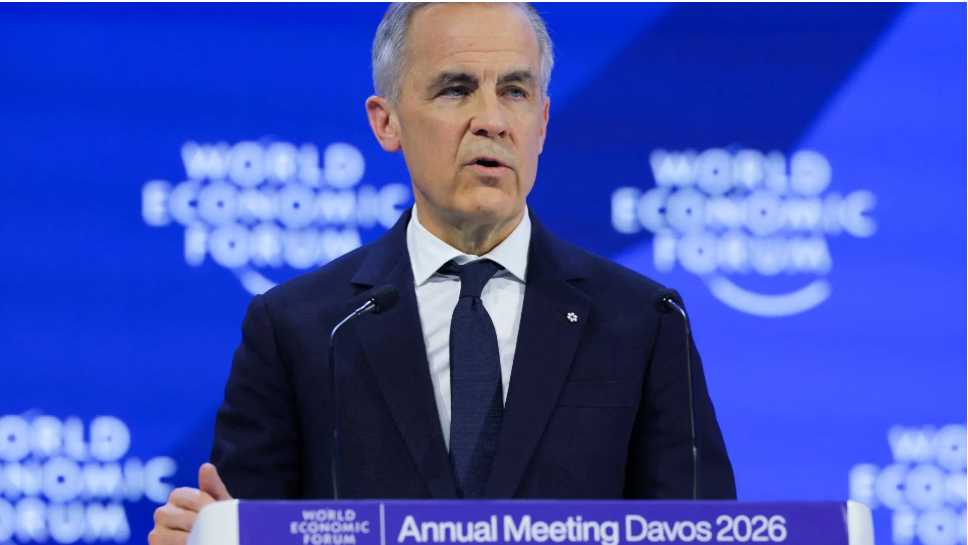
スイスで開かれた世界経済フォーラム(ダボス会議)で演説するカナダのマーク・カーニー首相
カナダのマーク・カーニー首相が1月20日、スイスで開かれた世界経済フォーラム(ダボス会議)で行った演説。首相は「もはや旧秩序は戻らない」「ノスタルジー(追憶)は戦略ではない」と断言した。
演説の真価は、カナダや日本、オーストラリアといった「ミドルパワー(中堅国家)」が強固に連携することで、崩れゆく旧秩序の先に、新たな国際秩序を主体的に築き得るという力強い提言にある。
元イングランド銀行総裁という稀代のリアリストであるカーニー首相の言葉は、分断が進む現代世界を象徴するパラダイムシフトとして、歴史に記憶されるだろう。世界が直面する「断絶」を直視し、その中でミドルパワーが果たすべき役割と生存戦略を、明確かつ揺るぎない言葉で示したからだ。
「原則と現実主義:カナダの進む道」と題されたカーニー首相の演説の全文は以下の通り。
ありがとう、ラリー。
カナダ、そして世界にとっての転換点にあたるこの場で、皆さんと共にいることは、私にとって喜びであり、同時に責務でもあります。
本日は、世界秩序の断絶、心地よい物語の終焉、そして大国間の地政学がもはやいかなる制約も受けないという、厳しい現実の始まりについてお話しします。
しかし同時に、特にカナダのようなミドルパワー諸国は決して無力ではない、ということも申し上げたい。人権の尊重、持続可能な開発、連帯、主権、国家の領土的一体性といった価値を体現する新たな秩序を築く力を、私たちは持っています。
弱き者の力は、まず誠実さから始まります。
私たちは日々、大国間競争の時代に生きていることを思い知らされています。ルールに基づく国際秩序が衰退しつつあること、強者はできることを行い、弱者は耐えねばならないこと。
トゥキュディデスのこの警句は、避けられない現実として語られがちです。国際関係の自然な論理が再び前面に出てきたのだ、と。そしてこの論理を前に、多くの国は「波風を立てずにやり過ごす」方向へと傾きます。迎合し、摩擦を避け、従順さが安全を買うと期待するのです。
しかし、それは安全をもたらしません。では、私たちにどのような選択肢があるのでしょうか。
1978年、チェコの反体制派ヴァーツラフ・ハヴェルは『無力者の力』というエッセイを書きました。彼はこう問いかけます。共産主義体制はいかにして維持されてきたのか。
彼の答えは、八百屋の話から始まります。毎朝、この店主は店先にこう書かれた看板を掲げます。「万国の労働者よ、団結せよ!」。彼自身はそれを信じていません。誰も信じていません。しかし、厄介事を避け、従順さを示し、周囲と折り合いをつけるために掲げるのです。そして、すべての通りのすべての店主が同じことをすることで、体制は存続します。
それは暴力だけによってではなく、人々が内心では虚偽だと知りながら儀礼に参加することで維持されるのです。
ハヴェルはこれを「嘘の中で生きること」と呼びました。体制の力は真実性にあるのではなく、皆がそれを真実であるかのように演じ続ける意志にあります。そしてその脆さも同じところにある。たった一人でも演じることをやめたとき――八百屋が看板を外したとき――幻想は崩れ始めるのです。今こそ、企業も国家も、その看板を外すときです。
数十年にわたり、カナダのような国々は「ルールに基づく国際秩序」のもとで繁栄してきました。私たちはその制度に参加し、原則を称揚し、予測可能性の恩恵を受けました。その庇護のもとで、価値に基づく外交を追求することができました。
私たちは、この国際秩序の物語が部分的には虚構であることを知っていました。最強国は都合のよいときには例外を認められること、貿易ルールは非対称的に執行されること、国際法の厳格さは加害者や被害者の立場によって異なること。
それでもこの虚構は有用でした。とりわけ米国の覇権は、公海の自由、安定した金融システム、集団安全保障、紛争解決の枠組みといった公共財を提供してきました。
だから私たちは看板を掲げ、儀礼に参加し、言辞と現実の乖離を大きく指摘することを避けてきたのです。しかし、この取引はもはや成り立ちません。率直に言いましょう。私たちは「移行期」ではなく、「断絶」のただ中にいます。
過去20年にわたる金融、保健、エネルギー、地政学の危機は、過度なグローバル統合がもたらすリスクを白日の下にさらしました。
近年では、大国が経済的統合そのものを武器として使い始めています。関税は圧力手段となり、金融インフラは威圧の道具となり、サプライチェーンは付け込まれる脆弱性となっています。統合が相互利益ではなく、従属の源泉となるなら、「嘘の中で生きる」ことはできません。
ミドルパワーが頼ってきた多国間制度――WTO、国連、COPといった集団的問題解決の建築物――は著しく弱体化しています。
その結果、多くの国が同じ結論に達しています。エネルギー、食料、重要鉱物、金融、サプライチェーンにおいて、より大きな戦略的自律性を確保しなければならない、と。
この衝動は理解できます。自国で食料も燃料も確保できず、防衛もできない国には選択肢がほとんどありません。ルールが守ってくれないなら、自分で自分を守るしかないのです。しかし、冷静に見なければなりません。要塞化した世界は、より貧しく、より脆弱で、より持続不可能なものになります。
さらにもう一つの真実があります。大国がルールや価値の「建前」さえ放棄し、力と利益の追求に専念するなら、取引主義から得られる利益は次第に再現困難になります。覇権国は永遠に関係を換金し続けることはできません。
同盟国は不確実性に備え、多角化を進め、保険をかけ、選択肢を増やします。これは主権の再構築です。かつてはルールに基づいていた主権が、今後は圧力に耐える能力に根差すようになります。
私は申し上げました。こうした古典的なリスク管理にはコストが伴います。しかし、戦略的自律性や主権のコストは共有することも可能です。強靱性への共同投資は、各国が個別に要塞を築くより安上がりです。共通基準は分断を減らし、相互補完はプラスサムを生みます。
カナダのようなミドルパワーにとっての問題は、新たな現実に適応するか否かではありません。適応は不可避です。問題は、単に壁を高くすることで適応するのか、それともより野心的な道を選べるのか、です。
カナダは早い段階で警鐘を聞き、戦略姿勢を根本的に転換しました。地理や同盟への所属が自動的に繁栄と安全をもたらす、という従来の心地よい前提がもはや成り立たないことを、カナダ国民は理解しています。
私たちの新たなアプローチは、アレクサンダー・ストゥブ氏の言う「価値に基づく現実主義」に立脚しています。言い換えれば、原則を持ち、かつ現実的であることです。主権と領土的一体性、国連憲章に合致する場合を除く武力行使の禁止、人権尊重といった基本的価値への原則的なコミットメント。
同時に、進展はしばしば漸進的であり、利害は分岐し、すべてのパートナーが価値を共有するわけではないという現実を認識する実利主義。私たちは世界をあるがままに直視し、望む世界を待つのではなく、現実の世界に主体的に関与します。
カナダは、関係の深さが価値観を反映するよう、各国との関係を調整しています。流動化する世界秩序とそのリスク、そして次に来るものの重要性を踏まえ、影響力を最大化するため、幅広い関与を優先しています。
私たちはもはや価値の強さだけに頼るのではなく、自らの強さの価値にも依拠しています。その強さを国内で築いています。
私の政権発足以降、所得、キャピタルゲイン、企業投資への減税を行い、州間貿易の連邦障壁をすべて撤廃しました。エネルギー、AI、重要鉱物、新たな貿易回廊などに、1兆ドル規模の投資を迅速に進めています。
2030年までに防衛支出を倍増させ、国内産業の育成につながる形で実施しています。対外的にも急速に多角化を進めています。EUと包括的戦略パートナーシップに合意し、欧州の防衛調達枠組みSAFEにも参加しました。
過去6か月で、4大陸にまたがる12の貿易・安全保障協定を締結しました。この数日間で、中国およびカタールとの新たな戦略的パートナーシップもまとめました。
インド、ASEAN、タイ、フィリピン、メルコスールとの自由貿易協定も交渉中です。地球規模の課題解決のため、価値と利益に基づき、課題ごとに異なる連合を組む「可変的幾何学」を追求しています。
ウクライナ問題では、「有志連合」の中核メンバーとして、人口比で最大級の防衛・安全保障支援を行っています。北極の主権をめぐっては、グリーンランドとデンマークを断固として支持し、グリーンランドの将来を決定する固有の権利を全面的に支持します。NATO第5条へのコミットメントは揺るぎません。
NATO同盟国(北欧・バルト8か国を含む)と連携し、地平線越えレーダー、潜水艦、航空機、地上部隊への前例のない投資を通じて、同盟の北方・西方防衛を強化しています。カナダはグリーンランドをめぐる関税措置に強く反対し、北極の安全と繁栄という共通目標に向けた集中的協議を呼びかけています。
複数国間貿易では、TPPとEUを結ぶ架け橋を構築し、15億人規模の新たな貿易圏を生み出そうとしています。重要鉱物では、G7を軸としたバイヤーズ・クラブを形成し、供給集中からの脱却を進めています。AI分野では、覇権国家か巨大テック企業かの二者択一を迫られないよう、志を同じくする民主主義国と協力しています。
これは甘い多国間主義ではありません。弱体化した制度に依存するものでもありません。課題ごとに機能する連合を築き、共通基盤を十分に共有するパートナーと共に行動することです。場合によっては、それは世界の大多数の国々になるでしょう。
同時に、将来の課題や機会に活かせる、貿易、投資、文化にまたがる緻密なネットワークを構築しています。ミドルパワーは連携しなければなりません。テーブルに着かなければ、メニューに載るからです。
大国は単独行動が可能です。市場規模、軍事力、交渉力があります。ミドルパワーにはそれがありません。覇権国と二国間でのみ交渉すれば、私たちは弱い立場から交渉し、提示された条件を受け入れ、最も迎合的であろうと競い合うことになります。
それは主権ではありません。従属を受け入れながら、主権を演じているにすぎません。大国間競争の世界で、中間に位置する国々には選択があります。寵愛を求めて互いに競うのか、それとも結束して影響力ある第三の道を創るのか。
ハードパワーの台頭に目を奪われ、正統性、誠実さ、ルールの力が――共に行使するなら――なお強力である事実を見失ってはなりません。
ここで再び、ハヴェルに立ち返ります。ミドルパワーが「真実の中で生きる」とは何か。現実を名指しすることです。「ルールに基づく国際秩序」が、いまだ機能しているかのように唱えるのをやめること。現状を正しく呼ぶこと。すなわち、経済統合を威圧の武器として用いる大国間競争が激化する時代です。
一貫して行動することです。同盟国にも競争相手にも同じ基準を適用すること。一方からの経済的威圧を批判しながら、他方には沈黙するなら、私たちはまだ看板を掲げたままです。
信じると言っているものを実際に築くことです。旧秩序の復活を待つのではなく、言葉どおりに機能する制度や合意を創ること。
そして、威圧を可能にするレバレッジを減らすことです。強い国内経済の構築は常に最優先事項であり、国際的多角化は単なる経済的慎重さではなく、誠実な外交の物質的基盤です。報復への脆弱性を減らしてこそ、原則的立場を取る資格が生まれます。
カナダには、世界が求めるものがあります。私たちはエネルギー超大国であり、膨大な重要鉱物資源を持ち、世界で最も教育水準の高い国民を擁しています。年金基金は世界最大級かつ高度な投資家であり、資本、人材、そして決断力を持つ政府があります。
そして、多くの国が希求する価値があります。多元的で機能する社会。騒がしく、多様で、自由な公共空間。持続可能性への揺るぎないコミットメント。
不安定な世界において、長期的関係を重んじ、築く、安定した信頼できるパートナーです。さらにカナダには、今何が起きているのかを理解し、それに応じて行動する決意があります。この断絶は、単なる適応以上のものを要求しています。世界をあるがままに見る誠実さです。
私たちは看板を外します。旧秩序は戻りません。嘆くべきではありません。ノスタルジアは戦略ではありません。しかし、この断裂から、より良く、より強く、より公正なものを築くことはできます。
それこそが、要塞化した世界から最も大きな損失を被り、真の協力の世界から最も大きな利益を得る、ミドルパワーの使命です。
強者には強者の力があります。しかし、私たちにも力があります。見せかけをやめ、現実を名指しし、国内で力を蓄え、共に行動する力です。
それがカナダの道です。私たちはそれを公然と、自信をもって選びます。そしてこの道は、共に歩む意思のあるすべての国に開かれています。
「地理や同盟への所属が自動的に繁栄と安全をもたらす、という従来の心地よい前提がもはや成り立たないこと」を、カナダ国民は理解しているそうですが、日本国民やその指導者は理解しているのでしょうか?
また、一方(中国)からの経済的威圧を批判しながら、他方(の関税)には沈黙するなら、私たちはまだ看板を掲げたままです。早く、幻想を捨てて看板を下ろして欲しいです。
以下は、ダボス会議の公式サイトに掲載された英語原文です。「ありがとう、ラリー。」から「弱き者の力は、まず誠実さから始まります。」まではフランス語で話されたようです。
Thank you very much, Larry. I’m going to start in French, and then I’ll switch back to English.
[The following is translated from French]
Thank you, Larry. It is both a pleasure, and a duty, to be with you tonight in this pivotal moment that Canada and the world going through.
Today I will talk about a rupture in the world order, the end of a pleasant fiction and the beginning of a harsh reality, where geopolitics, where the large, main power, geopolitics, is submitted to no limits, no constraints.
On the other hand, I would like to tell you that the other countries, especially intermediate powers like Canada, are not powerless. They have the capacity to build a new order that encompasses our values, such as respect for human rights, sustainable development, solidarity, sovereignty and territorial integrity of the various states.
The power of the less power starts with honesty.
[Carney returns to speaking in English]
It seems that every day we’re reminded that we live in an era of great power rivalry, that the rules based order is fading, that the strong can do what they can, and the weak must suffer what they must.
And this aphorism of Thucydides is presented as inevitable, as the natural logic of international relations reasserting itself.
And faced with this logic, there is a strong tendency for countries to go along to get along, to accommodate, to avoid trouble, to hope that compliance will buy safety.
Well, it won’t.
So, what are our options?
In 1978, the Czech dissident Václav Havel, later president, wrote an essay called The Power of the Powerless, and in it, he asked a simple question: how did the communist system sustain itself?
And his answer began with a greengrocer.
Every morning, this shopkeeper places a sign in his window: ‘Workers of the world unite’. He doesn’t believe it, no-one does, but he places a sign anyway to avoid trouble, to signal compliance, to get along. And because every shopkeeper on every street does the same, the system persist – not through violence alone, but through the participation of ordinary people in rituals they privately know to be false.
Havel called this “living within a lie”.
The system’s power comes not from its truth, but from everyone’s willingness to perform as if it were true, and its fragility comes from the same source. When even one person stops performing, when the greengrocer removes his sign, the illusion begins to crack. Friends, it is time for companies and countries to take their signs down.
For decades, countries like Canada prospered under what we called the rules-based international order. We joined its institutions, we praised its principles, we benefited from its predictability. And because of that, we could pursue values-based foreign policies under its protection.
We knew the story of the international rules-based order was partially false that the strongest would exempt themselves when convenient, that trade rules were enforced asymmetrically. And we knew that international law applied with varying rigour depending on the identity of the accused or the victim.
This fiction was useful, and American hegemony, in particular, helped provide public goods, open sea lanes, a stable financial system, collective security and support for frameworks for resolving disputes.
So, we placed the sign in the window. We participated in the rituals, and we largely avoided calling out the gaps between rhetoric and reality.
This bargain no longer works. Let me be direct. We are in the midst of a rupture, not a transition.
Over the past two decades, a series of crises in finance, health, energy and geopolitics have laid bare the risks of extreme global integration. But more recently, great powers have begun using economic integration as weapons, tariffs as leverage, financial infrastructure as coercion, supply chains as vulnerabilities to be exploited.
You cannot live within the lie of mutual benefit through integration, when integration becomes the source of your subordination.
The multilateral institutions on which the middle powers have relied – the WTO, the UN, the COP – the architecture, the very architecture of collective problem solving are under threat. And as a result, many countries are drawing the same conclusions that they must develop greater strategic autonomy, in energy, food, critical minerals, in finance and supply chains.
And this impulse is understandable. A country that can’t feed itself, fuel itself or defend itself, has few options. When the rules no longer protect you, you must protect yourself.
But let’s be clear eyed about where this leads.
A world of fortresses will be poorer, more fragile and less sustainable. And there is another truth. If great powers abandon even the pretense of rules and values for the unhindered pursuit of their power and interests, the gains from transactionalism will become harder to replicate.
Hegemons cannot continually monetize their relationships.
Allies will diversify to hedge against uncertainty.
They’ll buy insurance, increase options in order to rebuild sovereignty – sovereignty that was once grounded in rules, but will increasingly be anchored in the ability to withstand pressure.
This room knows this is classic risk management. Risk management comes at a price, but that cost of strategic autonomy, of sovereignty can also be shared.
Have you read?
In pictures: World leaders, top CEOs gather at Davos 2026
Collective investments in resilience are cheaper than everyone building their own fortresses. Shared standards reduce fragmentations. Complementarities are positive sum. And the question for middle powers like Canada is not whether to adapt to the new reality – we must. The question is whether we adapt by simply building higher walls, or whether we can do something more ambitious.
Now Canada was amongst the first to hear the wake-up call, leading us to fundamentally shift our strategic posture.
Canadians know that our old comfortable assumptions that our geography and alliance memberships automatically conferred prosperity and security – that assumption is no longer valid. And our new approach rests on what Alexander Stubb, the President of Finland, has termed “value-based realism”.
Or, to put another way, we aim to be both principled and pragmatic – principled in our commitment to fundamental values, sovereignty, territorial integrity, the prohibition of the use of force, except when consistent with the UN Charter, and respect for human rights, and pragmatic and recognizing that progress is often incremental, that interests diverge, that not every partner will share all of our values.
So, we’re engaging broadly, strategically with open eyes. We actively take on the world as it is, not wait around for a world we wish to be.
We are calibrating our relationships, so their depth reflects our values, and we’re prioritizing broad engagement to maximize our influence, given and given the fluidity of the world at the moment, the risks that this poses and the stakes for what comes next.
And we are no longer just relying on the strength of our values, but also the value of our strength.
We are building that strength at home.
Since my government took office, we have cut taxes on incomes, on capital gains and business investment. We have removed all federal barriers to interprovincial trade. We are fast tracking a trillion dollars of investments in energy, AI, critical minerals, new trade corridors and beyond. We’re doubling our defence spending by the end of this decade, and we’re doing so in ways that build our domestic industries.
And we are rapidly diversifying abroad. We have agreed a comprehensive strategic partnership with the EU, including joining SAFE, the European defence procurement arrangements. We have signed 12 other trade and security deals on four continents in six months. The past few days, we’ve concluded new strategic partnerships with China and Qatar. We’re negotiating free trade pacts with India, ASEAN, Thailand, Philippines and Mercosur.
We’re doing something else. To help solve global problems, we’re pursuing variable geometry, in other words, different coalitions for different issues based on common values and interests. So, on Ukraine, we’re a core member of the Coalition of the Willing and one of the largest per capita contributors to its defence and security.
On Arctic sovereignty, we stand firmly with Greenland and Denmark, and fully support their unique right to determine Greenland’s future.
Our commitment to NATO’s Article 5 is unwavering, so we’re working with our NATO allies, including the Nordic Baltic Gate, to further secure the alliance’s northern and western flanks, including through Canada’s unprecedented investments in over-the-horizon radar, in submarines, in aircraft and boots on the ground, boots on the ice.
Canada strongly opposes tariffs over Greenland and calls for focused talks to achieve our shared objectives of security and prosperity in the Arctic.
On plurilateral trade, we’re championing efforts to build a bridge between the Trans Pacific Partnership and the European Union, which would create a new trading bloc of 1.5 billion people. On critical minerals, we’re forming buyers’ clubs anchored in the G7 so the world can diversify away from concentrated supply. And on AI, we’re cooperating with like-minded democracies to ensure that we won’t ultimately be forced to choose between hegemons and hyper-scalers.
This is not naive multilateralism, nor is it relying on their institutions. It’s building coalitions that work – issues by issue, with partners who share enough common ground to act together.
In some cases, this will be the vast majority of nations.
What it’s doing is creating a dense web of connections across trade, investment, culture, on which we can draw for future challenges and opportunities.
Argue, the middle powers must act together, because if we’re not at the table, we’re on the menu.
But I’d also say that great powers, great powers can afford for now to go it alone. They have the market size, the military capacity and the leverage to dictate terms. Middle powers do not.
But when we only negotiate bilaterally with a hegemon, we negotiate from weakness. We accept what’s offered. We compete with each other to be the most accommodating.
This is not sovereignty. It’s the performance of sovereignty while accepting subordination. In a world of great power rivalry, the countries in between have a choice – compete with each other for favour, or to combine to create a third path with impact.
We shouldn’t allow the rise of hard power to blind us to the fact that the power of legitimacy, integrity and rules will remain strong, if we choose to wield them together – which brings me back to Havel.
What does it mean for middle powers to live the truth?
First, it means naming reality. Stop invoking rules-based international order as though it still functions as advertised. Call it what it is – a system of intensifying great power rivalry, where the most powerful pursue their interests, using economic integration as coercion.
It means acting consistently, applying the same standards to allies and rivals. When middle powers criticize economic intimidation from one direction, but stay silent when it comes from another, we are keeping the sign in the window.
It means building what we claim to believe in, rather than waiting for the old order to be restored. It means creating institutions and agreements that function as described. And it means reducing the leverage that enables coercion – that’s building a strong domestic economy. It should be every government’s immediate priority.
And diversification internationally is not just economic prudence, it’s a material foundation for honest foreign policy, because countries earn the right to principled stands by reducing their vulnerability to retaliation.
Have you read?
Over 60 heads of state are gathering at Davos 2026. Here’s what they’re saying
So Canada. Canada has what the world wants. We are an energy superpower. We hold vast reserves of critical minerals. We have the most educated population in the world. Our pension funds are amongst the world’s largest and most sophisticated investors. In other words, we have capital, talent… we also have a government with immense fiscal capacity to act decisively. And we have the values to which many others aspire.
Canada is a pluralistic society that works. Our public square is loud, diverse and free. Canadians remain committed to sustainability. We are a stable and reliable partner in a world that is anything but.. A partner that builds and values relationships for the long term.
And we have something else. We have a recognition of what’s happening and a determination to act accordingly. We understand that this rupture calls for more than adaptation. It calls for honesty about the world as it is.
We are taking the sign out of the window. We know the old order is not coming back. We shouldn’t mourn it. Nostalgia is not a strategy, but we believe that from the fracture, we can build something bigger, better, stronger, more just. This is the task of the middle powers, the countries that have the most to lose from a world of fortresses and most to gain from genuine cooperation.
The powerful have their power.
But we have something too – the capacity to stop pretending, to name reality, to build our strength at home and to act together.
That is Canada’s path. We choose it openly and confidently, and it is a path wide open to any country willing to take it with us. Thank you very much.

コメント